

Learn More About the Unique Qualities of 3 Popular Deck Materials
Choosing the right decking material is one of the most important decisions you’ll make when planning a new outdoor living space. With so many deck materials available today, it can be difficult for homeowners to understand what sets each option apart. PVC, composite, and capped composite decks are three of the most popular choices, and each one offers its own strengths, price range, and ideal uses.
If you’re just beginning your research, this guide will help you understand how these materials differ so you can make an informed decision about your home’s outdoor upgrade.
Getting To Know Deck Materials
The deck materials you select effectively set the tone for the rest of your project. The following sections cover PVC, capped composite, and composite decking, so you can get an idea of what makes each material type unique.
PVC Decking
PVC decking is made entirely from synthetic materials, usually high‑quality plastics that resist moisture, insects, and weather damage. Because it contains no organic material, PVC decking does not rot, warp, or attract pests.
PVC decking is known for its lightweight feel and excellent resistance to water. This makes it a strong choice for homeowners who want a low‑maintenance deck that holds up well in humid or rainy climates.
PVC decking tends to fall on the higher end of the price range. Homeowners often choose it when long‑term durability and minimal upkeep are the top priorities. It’s ideal for pool areas, homes with heavy moisture exposure, or anyone who wants a deck that only requires occasional cleaning.
Composite Decking
Composite decking was the first widely available manufactured decking option, and over time the term “composite” has essentially become a catch‑all label for man‑made deck materials. Traditional composite boards are made from a mix of wood fibers and recycled plastics, giving them a wood‑like appearance with better resistance to rot and insects than natural lumber. However, as the industry has advanced, standard composite decking has begun to fall out of favor.
A true, uncapped composite board tends to fade over time and can even delaminate as it ages. Because the surface contains organic material, it’s also more prone to mold growth in damp or shaded environments. These limitations are a key reason why capped composite decking — an improved product with a protective polymer shell — now outperforms traditional composite in nearly every category, including durability, color retention, and long‑term maintenance.
Despite these drawbacks, traditional composite decking was once considered a mid‑range, budget‑friendly choice. However, with today’s manufacturing efficiencies, many entry‑level capped composite products are actually more affordable and more durable than standard composite boards.
Capped Composite Decking
Capped composite decking is similar to traditional composite, but with an added protective outer layer. This cap is made from a durable polymer that shields the inner core from moisture, fading, and staining. The result is a deck that combines the strength of composite with the added protection of PVC‑style materials.
Capped composite decking is known for its long lifespan and consistent appearance. The protective shell helps prevent color fading and surface wear, making it a good choice for homeowners who want a deck that looks newer for longer. It also resists mold and mildew better than uncapped composite.
Capped composite decking is usually priced slightly higher than standard composite but lower than full PVC decking. It’s ideal for homeowners who want a low‑maintenance deck with strong color retention and enhanced durability.
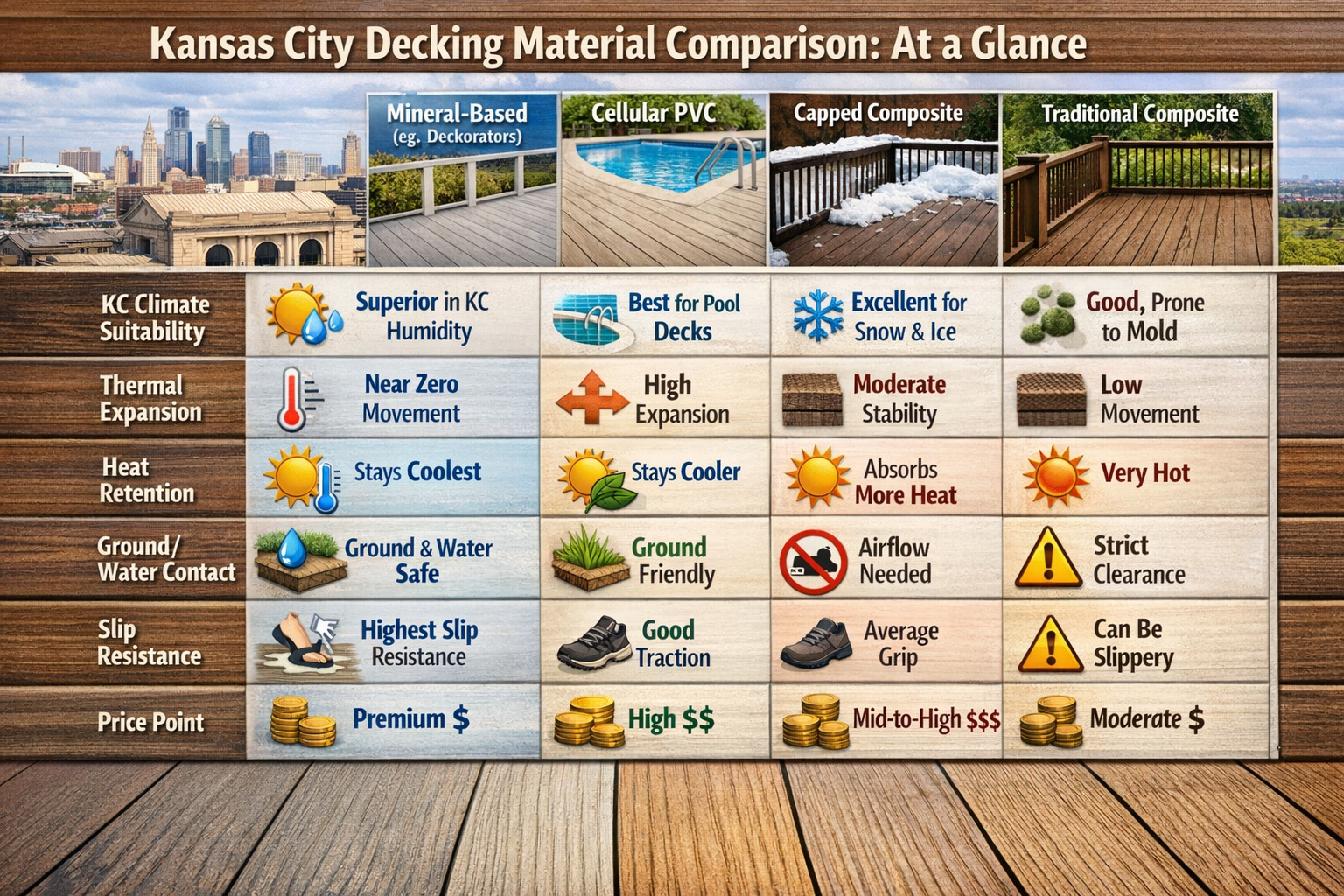
We see the most thermal expansion issues in KC with standard PVC installs that weren’t gapped for our 100-degree temperature swings.
In the Kansas City area specifically, many homeowners select capped composite because it’s more resilient against extreme weather and temperature fluctuations. Capped composite, such as Fiberon, TimberTech, Deckorators, TREX, and Envision decking, offer the benefits of PVC without the thermal expansion and contraction problems.
The Value of Working With an Experienced Deck Contractor Near You
Choosing the right decking material is only part of the process. Working with skilled deck contractors near you ensures your project is built to last. Experienced builders understand how different deck materials perform, how they respond to weather, and how to install them correctly for long‑term stability.
A knowledgeable contractor can help you compare PVC decking, composite decking, and capped composite options based on your goals, budget, and maintenance preferences. They can also guide you through design choices such as layout, railing styles, and custom features that make your outdoor space more functional and visually appealing.
High‑quality construction is essential for any deck. Even the best materials won’t perform well if they aren’t installed properly. Skilled deck contractors near you bring the craftsmanship, planning, and attention to detail needed to ensure your deck is safe, sturdy, and built to handle years of use.
Choosing the Right Deck Material for Your Home
PVC decking, composite decking, and capped composite decking each offer unique benefits. No matter which material you choose, working with experienced deck contractors near you will help you get the most value from your investment. A well‑designed and properly built deck can transform your backyard into a comfortable, stylish space for relaxing and entertaining.
If you’re ready to explore your options, a professional contractor can walk you through the differences, help you compare pricing, and recommend the best material for your lifestyle and long‑term goals.